Limits and Learning

WritingOn:toa-heftiba-95457

(Photo: Toa Heftiba, Unsplash.com)

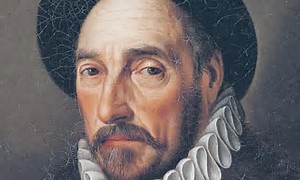
In writing essays I have, for several years now, followed the godfather of essay writing, Michel de Montaigne, in regarding them as essais or ‘attempts,’ even ‘tests.’ “What do I know?” Montaigne famously asked as justification for writing so freely on so many diverse topics, sometimes in the same piece. He was intent on testing himself, finding out what he knew and how he could best express it.

He was also unafraid to admit his learning curve, both morally and socially. “When the discussion becomes turbulent and lacks order,” he says, commenting on the art of conversation, “I quit the subject-matter and cling irritably and injudiciously to the form, dashing into a style of debate which is stubborn, ill-willed and imperious, one which I have to blush for later.”

Me too.

I envy Montaigne’s ability to skip lightly from a discussion of learning how to die to cannibals to educating the young. All the way along he quotes from Plato, Aristotle, Seneca, Cicero, Virgil, Hesiod, Horace, and Plutarch, as well as friends and enemies, Josephus and St. Augustine. The man knew everybody worth knowing in ancient and medieval literature and philosophy.

His book, he said in a note to his readers, was for his family and friends, so that when they lose him (as they surely will soon) “they can find here again some traits of my character and of my humours.” Yet having written and published his essays, he returned to them continually, adding, subtracting, revising, polishing, cutting and trimming, mulling over them, grafting in new ideas onto the trunk of his earlier efforts. He wrote and revised until he died, judging his work never to be finished, but rather always in transit.

Saved from self-absorption by his cheerful humility, Montaigne writes about himself because “Every man has within himself the entire human condition.” In a time when the individual was emerging from the crowd this was heady stuff; today it might be greeted with a yawn or roundly criticized as presumptuous and arrogant: “Who are you to say that you know my experience? Everybody is unique!”

What we have in Montaigne is a voice unafraid to speak up for itself, but one which will gladly learn from anyone, even those opposed to it. His confidence is infectious; he boldly goes where he has not gone before, relaying messages about his changes back to Federation Headquarters as they occur. His self-awareness is acute without being cloying: “And on the loftiest throne in the world we are still sitting only on our own rump.”

Today, wanting to write and determined to try, I began with an idea that had leapt out from my current readings in history and historiography. Since I don’t outline before I write I trusted that having read and pondered and watered my tiny mustard seed of a thought I would be able to grow it into a bush that the birds could flock to in numbers. But from the first sentence I was riddled with doubt. If I took this particular path I would have to explain the background; if I assumed this point, I would cloud the context. On and on it went, the original beam forking into fractals, each one bending the light until I could no longer see.

“A man should learn to detect and watch that gleam of light which flashes across his mind from within,” says Emerson. “In every work of genius we recognize our own rejected thoughts; they come back to us with a certain alienated majesty.” But that was precisely the issue! My thoughts had all been said and written before, usually better, by other people. A certain obsessive quality in me runs every idea through an originality sieve, sifting to find some gem that no one has thought of before.

That’s when I turned to Thomas Merton who wrote constantly and fluently on several dominant themes throughout his life. “No one need have a compulsion to be utterly and perfectly “original” in every word he writes,” says Merton. “All that matters is that the old be recovered on a new plane and be, itself, a new reality.”

Like most authors, Merton wondered if he was connecting, if what he wrote was making a difference in people’s lives. If a manuscript passed through the diocesan censors with minimal damage and then on to the publisher’s editing, Merton couldn’t help but worry that it was bland and forgettable. Later in life, musing on this need for writers to be needed, he says, “You give some of it to others, if you can. Yet one should be able to share things with others without bothering too much about how they like it, either, or how they accept it. Assume they will accept it, if they need it. And if they don’t need it, why should they accept it? That is their business. Let me accept what is mine and give them all their share, and go my way.”

Late in the day, going over this piece, those were words I needed to hear. I hadn’t written what I thought I would, but I had written, even though it was to stitch together the thoughts of others whose writing I admire. That was something, at least. “So do not worry about tomorrow,” said Jesus, “for tomorrow will bring worries of its own. Today’s trouble is enough for today.”

There is that.

Montaigne on Those Who Lead

I often turn to Michel de Montaigne (1533-1592), the cheerful philosopher for the common man, for insight into life. In his essay, “On the Art of Conversation” (required reading for every person these days), he not only shows an admirable self-awareness and humility about his own sometimes quick judgments, but he also provides us a commonsense perspective on those who hold power.

Here is one example:

”It is the same for those who rule over us and give orders, who hold the world in their hands: it is not enough for them to have an ordinary intelligence, to be able to achieve what we can. They are far beneath us if they are not way above us. Since they promise more, they owe more too; that is why keeping silent is not, in their case, merely a courteous and grave demeanor; it is also more often a profitable and gainful one.”

And then in the category of “Checking for Clothes on the Emperor,” he offers this:

”Now I was just about to say that it merely suffices for us to see a man raised to great dignity; even though we knew him three days before to be a negligible man, there seeps into our opinions, unawares, a notion of greatness, of talents, and we convince ourselves that by growing in style and reputation he has grown in merit. Our judgements of him are not based on his worth but (as is the case with the counters of an abacus) on the tokens of rank. Let his luck turn again, let him have a fall and be lost in the crowd again, then we all ask in wonder what had made him soar so high! ‘Is this the same man?’ we ask.”

As a French nobleman, a courtier, and a former public servant, Montaigne could have been writing about any of the six kings who ruled in his lifetime from the Houses of Valois and Bourbon. He knew how Fate and Luck could thrust a man onto the throne, qualified or not, and just as easily take him down again.

That was in a political system without a vote or a choice by the people as to who would lead the country. We have it better: our leaders answer to us—as long as we insist on it. Montaigne’s words reveal the tension in a democratic republic: anyone can run for office; they need only persuade us that they are qualified.

The Compassion Curve

Picture1

Before U2’s iNNOCENCE + eXPERIENCE album and tour (2015) there was William Blake’s “Songs of Innocence and Experience.” Here’s a look at how we begin in innocence, drop into experience, and rise—if we are able—to a new form of Innocent Experience, through what I call The Compassion Curve. Click on the link below to see the presentation.

The Compassion Curve

The Future of Our Present

Lens:jean-marc-gerbelost-260311

What might our present age look like to historians in 100 years? What would we save now, going forward, that would give historians of the future a credible look at who we are today? This presentation looks at a particular moment in the history of one American church, but the principles of historiography—the study of history and the writing of history—can apply to any group or era.

Click on the link below for a PDF with presenter notes.

FuturePresent

The Matter of Words

ManAlone:luca-baggio

Words matter: when we bend and distort them they crack open and their life drains away. When we say “unity”, but we mean “conformity” something dies in the body of Christ.

The word “religion” is from “religio“, to bind. What does it bind? We could imagine that it binds us in constraint, that it keeps us from something—perhaps the world, perhaps each other, maybe even from sin. In this reading religion is a preventive measure, a prophylactic against anything to do with the senses, with the imagination, all things bright and beautiful, all features great and small. It becomes suffocating, rigid, a straitjacket laced tight with shame and humiliation.

But it needn’t be that way. That which binds are the bonds that hold us together and to each other. Religion flows through the poetry we take the time to enjoy, the moments in which we breathe in and out and refresh our souls, the light that even now enlightens the world. Religion, in its best sense, draws us together so that the world may know that Jesus is who he said he was—the son of God and our brother.

(Photo: Luca Baggio, at Unsplash.com)

Being With Thomas

BuriedLife2I would have been with Thomas in that upper room. Never an early adopter nor a joiner, I would have held back to watch others, see their reactions, imagine myself in their place until the resistance I felt toward the new had reduced its charge.

It’s a question of how we know what we know and whether what we know can be verified. It’s a question of how much you trust your senses and whether your rational faculties can puzzle it through. Mostly, it’s about whether you’re willing to look foolish in pursuit of truth.

Thomas gets the rap as the doubting one, forever holding out until he can touch and feel and see with his own eyes. Like it had never occurred to the rest of them that maybe this kingdom of God business was just too good to be true. Like all the other promises made that had not so much been broken as had not materialized beyond the promising stage. But with Thomas, it was never skepticism about the nature of Jesus’ intentions. Nor was it cynicism about the possibility of goodness in the world. There was plenty of goodness, and beauty also, and where goodness and beauty live truth must be in the neighborhood somewhere.

No, what Thomas knew about himself with the clarity that comes from aloneness is that he lacked the courage to commit himself to another.

It hadn’t always been this way. After all, he was Thomas—Didymus—aka ‘The Twin.’ There had been another, his brother, older by two minutes and stronger twice over. They had been inseparable, each the other half of the other, together as one, but not the same. He had led, Thomas had followed. Thomas was thoughtful, holding back, his brother plunging ahead with a shout. Thomas had read and questioned, his brother had acted. They had talked and argued late into the night about politics, religion, freedom. His brother joined a group; they were armed. He was adamant: “Better to die trying than not to try at all.” Later, after he was crucified with the others, the soldiers had come round for Thomas. By that time he had gone, into the night. Keeping to the back roads, he had traveled north to Galilee alone.

And now here he was amongst a band of brothers, younger than most, the first to ask, the last to step forward. When he had met Jesus it was as if he had seen his brother again: all the strength but without the recklessness. And now he was gone, crucified like his twin; another one taken, promises dashed.

So he might be forgiven, Thomas reckoned, for standing back when the others told him, breathlessly, that they had seen the Lord. “The door was shut, we were afraid, and then there He was!”

“I see,” said Thomas, but he didn’t really. “He asked about you,” they said. “He said he’d be back.”

“I’d have to see that for myself,” said Thomas dryly. Peter smiled. “He figured you’d say that.”

Eight days later he was with the others, the door locked and bolted, voices lowered. And then He was there, smiling, in their midst, and looking Thomas in the eye. “I’m real,” He said. “Touch me. Act on it! Believe.”

All this was a long time ago but set down this. Set down this: I came to faith, finally, by acting as if it were there. And then it was and is and will be if I but act.

For we are saved by hope:
but hope that is seen is not hope:
for what a man seeth,
why doth he yet hope for?
But if we hope for that we see not,
then do we with patience wait for it.

Where’s the Curiosity?

MuslimGirl

“To love the past may easily be an expression of the nostalgic romanticism of old men and old societies, a symptom of loss of faith and interest in the present or future.”

— E. H. Carr, What is History?

When I walk into a college classroom these days it is as quiet as libraries used to be. Every head is bowed and every thumb is purrling away at a screen. There are few, if any, conversations between students. No one looks up until I take record. When the class is over the students depart as silently as they came. Even if they are drifting in the same direction they rarely talk to one another. It’s almost impossible to catch the eye of a student walking toward me, and if I break the spell with a cheery “Hullo!”, there is a startle reflex that reveals the depth of the self-isolation.

In one of his most famous essays, Michel Montaigne says, “To my taste the most fruitful and most natural exercise of our minds is conversation. I find the practice of it the most delightful activity in our lives.” He likens a good conversation to vigorous sparring, his “strong and solid opponent will attack me on the flanks, stick his lance in me right and left; his ideas send mine soaring.” There is joy in the friction of ideas, a closeness made possible by an unspoken willingness to play up and higher than one’s own level of thought. “In conversation,” says Montaigne, “the most painful quality is perfect harmony.”

Montaigne’s essay, “The Art of Conversation,” is a primer for civilized and vigorous conversation. It should be read and reread, taught at the high school level, and carried about in one’s pocket. I would be delighted if it were read into the Congressional Record, but its good-natured guidelines would be obliterated or simply ignored. We don’t know how to talk with one another about things that matter.

“You cannot teach a man that which he thinks he already knows,” said Epictetus, a Stoic philosopher some one hundred years after Christ, who taught humility as a prerequisite to learning. Epictetus was striking at the arrogance that prevents us from even considering unfamiliar ideas. Today his words would be shrugged off: we make no claim to know but we know where to look it up—and that’s the end of it. No need to look elsewhere; the goal of education is to tag what comes up in response to a query. Decades of teaching to the test and demanding quantifiable results have taught our students to take the quickest route to the first answer that presents itself on Google.

Montaigne, who positively reveled in being contradicted by another because “he is instructing me,” wouldn’t have known what to do with humility in conversation. “My thought so often contradicts and condemns itself that it is all one to me if someone else does so, seeing that I give to his refutation only such authority as I please.” Montaigne didn’t need to give up anything in order to learn from another, especially not pride, because what mattered to him in conversation was the diligence in finding the truth, no matter where it came from.

If Montaigne were here today I would take issue with him about conversation and communication. Especially as it regards conversation in schools and universities, I would ask him to look farther back and deeper down to the seed of learning, which is curiosity. Actually, come to think of it, Epictetus’ call for humility first could be set aside if only the student had curiosity.

In learning through curiosity there is no need to curb one’s arrogance first. If we are truly curious, then arrogance plays no part in thwarting us in the pursuit of truth. Curiosity is the engine of learning: without it we wouldn’t be clothed, sitting at our computers, able to tap into the world’s knowledge at the touch of a screen. But finding the facts is only the beginning for the curious learner. Curiosity isn’t satisfied with just the facts, but hungers for meaning, context, application beyond the immediate problem. Curiosity is the air that the sciences breathe, but it’s the heart that beats within the humanities.

I suspect that what generates even the briefest conversation among strangers is curiosity about what another is experiencing and feeling and thinking. Surely it would be curiosity that could break through our ear-budded walls and lure us into conversation about . . . anything. Within the classroom it would be curiosity that would go beyond the facts to ask not only how and where, but when—and most importantly—why? I do not see this very often.

Today, as I left a class in which the legacy of Martin Luther King, Jr., and the life’s work of one of his mentors, Myles Horton, was the subject of discussion, and in which only one student commented, asked questions, and generally showed the fire of curiosity, I decided I was not angry or frustrated or wounded or even nostalgic. I was wistful for the leap and thrust and joyful friction of real conversation.

3 Christs: Art for Resistance

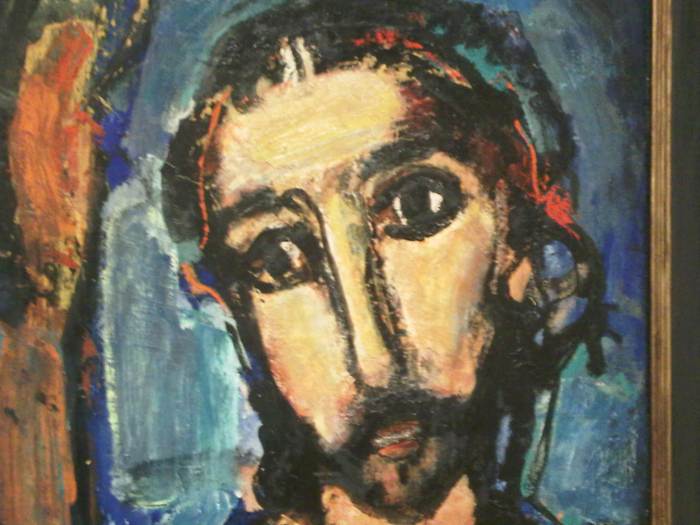
RoualtAlbert Camus and Thomas Merton: both had a lot to say about resistance. Camus famously posed a challenge to Christians to speak out with honesty and clarity against injustice. Merton, Trappist monk and prolific author, toward the end of his life seemed to be developing a “theology of love”which he also characterized as a “theology of resistance.” Through selected paintings of Marc Chagall, Georges Rouault, and Salvador Dali, we have contemplative imagery that can prepare us for new perspectives on resistance to injustice from a humanist Christian point of view. Clink on the link below to read the script and see the paintings.

3Christs