The Future of Our Present

Lens:jean-marc-gerbelost-260311

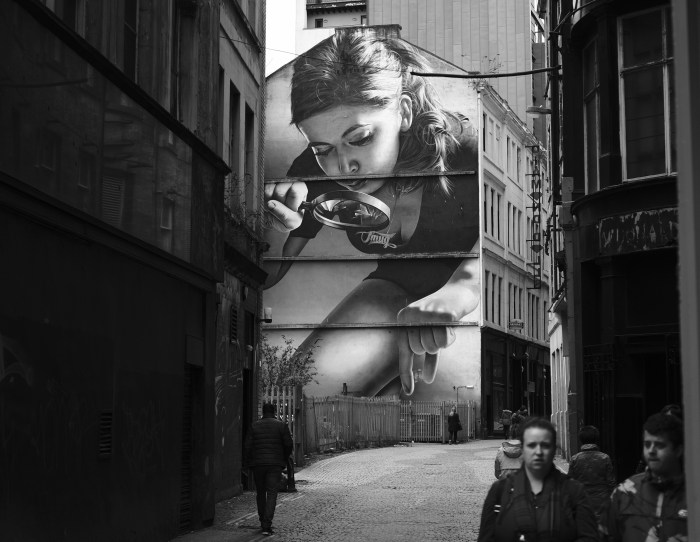
What might our present age look like to historians in 100 years? What would we save now, going forward, that would give historians of the future a credible look at who we are today? This presentation looks at a particular moment in the history of one American church, but the principles of historiography—the study of history and the writing of history—can apply to any group or era.

Click on the link below for a PDF with presenter notes.

FuturePresent

The Matter of Words

ManAlone:luca-baggio

Words matter: when we bend and distort them they crack open and their life drains away. When we say “unity”, but we mean “conformity” something dies in the body of Christ.

The word “religion” is from “religio“, to bind. What does it bind? We could imagine that it binds us in constraint, that it keeps us from something—perhaps the world, perhaps each other, maybe even from sin. In this reading religion is a preventive measure, a prophylactic against anything to do with the senses, with the imagination, all things bright and beautiful, all features great and small. It becomes suffocating, rigid, a straitjacket laced tight with shame and humiliation.

But it needn’t be that way. That which binds are the bonds that hold us together and to each other. Religion flows through the poetry we take the time to enjoy, the moments in which we breathe in and out and refresh our souls, the light that even now enlightens the world. Religion, in its best sense, draws us together so that the world may know that Jesus is who he said he was—the son of God and our brother.

(Photo: Luca Baggio, at Unsplash.com)

Being With Thomas

BuriedLife2I would have been with Thomas in that upper room. Never an early adopter nor a joiner, I would have held back to watch others, see their reactions, imagine myself in their place until the resistance I felt toward the new had reduced its charge.

It’s a question of how we know what we know and whether what we know can be verified. It’s a question of how much you trust your senses and whether your rational faculties can puzzle it through. Mostly, it’s about whether you’re willing to look foolish in pursuit of truth.

Thomas gets the rap as the doubting one, forever holding out until he can touch and feel and see with his own eyes. Like it had never occurred to the rest of them that maybe this kingdom of God business was just too good to be true. Like all the other promises made that had not so much been broken as had not materialized beyond the promising stage. But with Thomas, it was never skepticism about the nature of Jesus’ intentions. Nor was it cynicism about the possibility of goodness in the world. There was plenty of goodness, and beauty also, and where goodness and beauty live truth must be in the neighborhood somewhere.

No, what Thomas knew about himself with the clarity that comes from aloneness is that he lacked the courage to commit himself to another.

It hadn’t always been this way. After all, he was Thomas—Didymus—aka ‘The Twin.’ There had been another, his brother, older by two minutes and stronger twice over. They had been inseparable, each the other half of the other, together as one, but not the same. He had led, Thomas had followed. Thomas was thoughtful, holding back, his brother plunging ahead with a shout. Thomas had read and questioned, his brother had acted. They had talked and argued late into the night about politics, religion, freedom. His brother joined a group; they were armed. He was adamant: “Better to die trying than not to try at all.” Later, after he was crucified with the others, the soldiers had come round for Thomas. By that time he had gone, into the night. Keeping to the back roads, he had traveled north to Galilee alone.

And now here he was amongst a band of brothers, younger than most, the first to ask, the last to step forward. When he had met Jesus it was as if he had seen his brother again: all the strength but without the recklessness. And now he was gone, crucified like his twin; another one taken, promises dashed.

So he might be forgiven, Thomas reckoned, for standing back when the others told him, breathlessly, that they had seen the Lord. “The door was shut, we were afraid, and then there He was!”

“I see,” said Thomas, but he didn’t really. “He asked about you,” they said. “He said he’d be back.”

“I’d have to see that for myself,” said Thomas dryly. Peter smiled. “He figured you’d say that.”

Eight days later he was with the others, the door locked and bolted, voices lowered. And then He was there, smiling, in their midst, and looking Thomas in the eye. “I’m real,” He said. “Touch me. Act on it! Believe.”

All this was a long time ago but set down this. Set down this: I came to faith, finally, by acting as if it were there. And then it was and is and will be if I but act.

For we are saved by hope:
but hope that is seen is not hope:
for what a man seeth,
why doth he yet hope for?
But if we hope for that we see not,
then do we with patience wait for it.

Where’s the Curiosity?

MuslimGirl

“To love the past may easily be an expression of the nostalgic romanticism of old men and old societies, a symptom of loss of faith and interest in the present or future.”

— E. H. Carr, What is History?

When I walk into a college classroom these days it is as quiet as libraries used to be. Every head is bowed and every thumb is purrling away at a screen. There are few, if any, conversations between students. No one looks up until I take record. When the class is over the students depart as silently as they came. Even if they are drifting in the same direction they rarely talk to one another. It’s almost impossible to catch the eye of a student walking toward me, and if I break the spell with a cheery “Hullo!”, there is a startle reflex that reveals the depth of the self-isolation.

In one of his most famous essays, Michel Montaigne says, “To my taste the most fruitful and most natural exercise of our minds is conversation. I find the practice of it the most delightful activity in our lives.” He likens a good conversation to vigorous sparring, his “strong and solid opponent will attack me on the flanks, stick his lance in me right and left; his ideas send mine soaring.” There is joy in the friction of ideas, a closeness made possible by an unspoken willingness to play up and higher than one’s own level of thought. “In conversation,” says Montaigne, “the most painful quality is perfect harmony.”

Montaigne’s essay, “The Art of Conversation,” is a primer for civilized and vigorous conversation. It should be read and reread, taught at the high school level, and carried about in one’s pocket. I would be delighted if it were read into the Congressional Record, but its good-natured guidelines would be obliterated or simply ignored. We don’t know how to talk with one another about things that matter.

“You cannot teach a man that which he thinks he already knows,” said Epictetus, a Stoic philosopher some one hundred years after Christ, who taught humility as a prerequisite to learning. Epictetus was striking at the arrogance that prevents us from even considering unfamiliar ideas. Today his words would be shrugged off: we make no claim to know but we know where to look it up—and that’s the end of it. No need to look elsewhere; the goal of education is to tag what comes up in response to a query. Decades of teaching to the test and demanding quantifiable results have taught our students to take the quickest route to the first answer that presents itself on Google.

Montaigne, who positively reveled in being contradicted by another because “he is instructing me,” wouldn’t have known what to do with humility in conversation. “My thought so often contradicts and condemns itself that it is all one to me if someone else does so, seeing that I give to his refutation only such authority as I please.” Montaigne didn’t need to give up anything in order to learn from another, especially not pride, because what mattered to him in conversation was the diligence in finding the truth, no matter where it came from.

If Montaigne were here today I would take issue with him about conversation and communication. Especially as it regards conversation in schools and universities, I would ask him to look farther back and deeper down to the seed of learning, which is curiosity. Actually, come to think of it, Epictetus’ call for humility first could be set aside if only the student had curiosity.

In learning through curiosity there is no need to curb one’s arrogance first. If we are truly curious, then arrogance plays no part in thwarting us in the pursuit of truth. Curiosity is the engine of learning: without it we wouldn’t be clothed, sitting at our computers, able to tap into the world’s knowledge at the touch of a screen. But finding the facts is only the beginning for the curious learner. Curiosity isn’t satisfied with just the facts, but hungers for meaning, context, application beyond the immediate problem. Curiosity is the air that the sciences breathe, but it’s the heart that beats within the humanities.

I suspect that what generates even the briefest conversation among strangers is curiosity about what another is experiencing and feeling and thinking. Surely it would be curiosity that could break through our ear-budded walls and lure us into conversation about . . . anything. Within the classroom it would be curiosity that would go beyond the facts to ask not only how and where, but when—and most importantly—why? I do not see this very often.

Today, as I left a class in which the legacy of Martin Luther King, Jr., and the life’s work of one of his mentors, Myles Horton, was the subject of discussion, and in which only one student commented, asked questions, and generally showed the fire of curiosity, I decided I was not angry or frustrated or wounded or even nostalgic. I was wistful for the leap and thrust and joyful friction of real conversation.

3 Christs: Art for Resistance

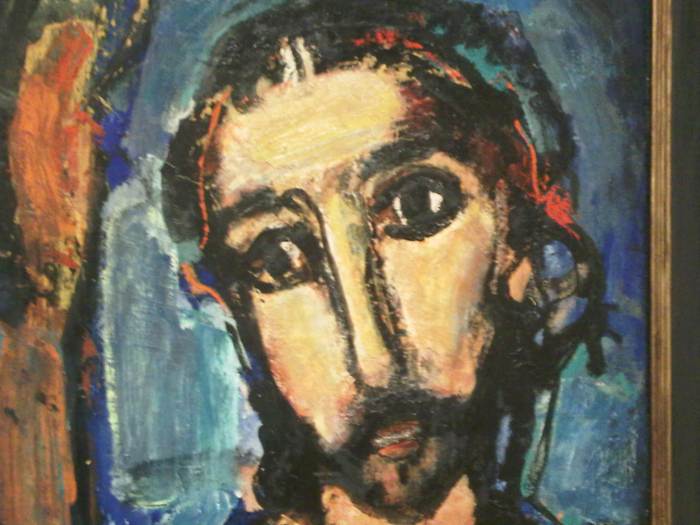
RoualtAlbert Camus and Thomas Merton: both had a lot to say about resistance. Camus famously posed a challenge to Christians to speak out with honesty and clarity against injustice. Merton, Trappist monk and prolific author, toward the end of his life seemed to be developing a “theology of love”which he also characterized as a “theology of resistance.” Through selected paintings of Marc Chagall, Georges Rouault, and Salvador Dali, we have contemplative imagery that can prepare us for new perspectives on resistance to injustice from a humanist Christian point of view. Clink on the link below to read the script and see the paintings.

3Christs

The Courage to Dialogue

camus

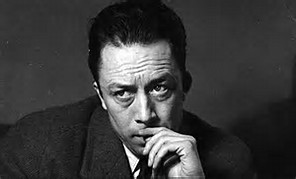
In 1948, Albert Camus, author of The Plague, The Stranger, The Fall, and The Rebel, among many other plays, essays, books, and journalism, was invited to speak at the Dominican Monastery of Latour-Maubourg. Camus was not a Christian, but he was not unacquainted with Christianity, and maintained a vigorous dialogue and correspondence with Christian thinkers and writers until his tragic death in 1960. In fact, he wrote his dissertation on a fellow North African—the theologian, preacher, and early Christian Church father, Augustine—and was always respectful of a tradition he did not follow. But he refused to attempt a reconciliation between his beliefs and Christian ideals merely to “be agreeable to all.” 

“On the contrary,” he said in his address, “what I feel like telling you today is that the world needs real dialogue, that falsehood is just as much the opposite of dialogue as is silence, and that the only possible dialogue is the kind between people who remain what they are and speak their minds. This is tantamount to saying that the world of today needs Christians who remain Christians.”

Further, asking whether the Catholic Church had condemned Nazism during the Second World War, Camus maintained that while the Church finally issued an encyclical against it, “The condemnation was voiced and it was not understood!”

In response to the invitation to speak freely to those gathered at the monastery that day, he offered these ringing words:

“What the world expects of Christians is that Christians should speak out, loud and clear, and that they should voice their condemnation in such a way that never a doubt, never the slightest doubt, could rise in the heart of the simplest man. That they should get away from abstraction and confront the blood-stained face history has taken on today.”

In these confusing and fraught times it is not easy to know how to speak up courageously as a Christian for justice and mercy. But I cannot ignore Camus’ direct challenge and I intend to rise to it.

Perhaps what we will someday live into would be something akin to Bonhoeffer’s “religionless Christianity” and Thomas Merton’s exploration of a post-Christian humanism. But that is a discussion for another day.

When Laws are Bad

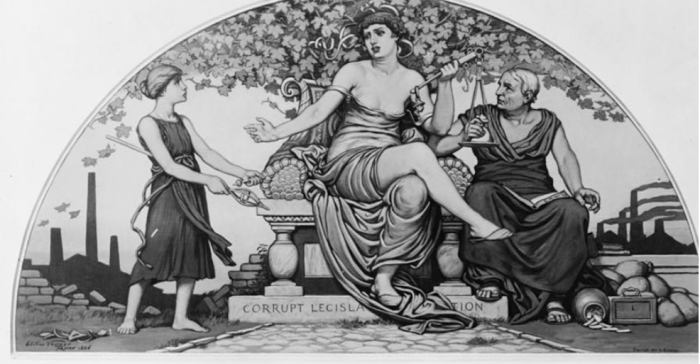
corruptlegislationlcWhen I was a child I was taught that laws were meant to be kept and respected. “Why?”, I asked. “Because they are the Law,” was the answer. By definition, then, laws were those human inventions that must be respected and followed by the sheer fact of their existence.

Somehow, that explanation sufficed for a time. But it sufficed because I was ten years old, a white kid growing up in Northern California in the Sixties, without any clear picture of how good I had it. My times were about to become tumultuous, and a few years later, when I was in high school, that explanation, that Law was sovereign just because, was blown open by a quiet American history teacher who engaged our teenage minds at the ground level.

“Have you ever wondered,” he mused one day in class, “why no black people live in Napa? Why the nearest place you will find blacks owning or renting homes is Vallejo, and beyond that, Oakland?” No, we admitted, we had not. “Do you know what redlining is?” he asked. Not a clue, we said.

He explained to us how redlining was the practice, by banks and other lending institutions, of drawing a line around neighborhoods that wanted to exclude certain people from buying there, people who might lower property values by their presence. Such was the practice in Napa at the time, and as such it came as a shock to us.

There was more: he explained how segregation was legal, how blacks in parts of the country were not allowed to eat, drink, sleep, learn, live, or have their being in proximity to whites, and that this was the result of laws intended to literally keep blacks in their place. Some laws are designed to hurt and destroy, he said, and he implored us to think critically about such laws.

Then there was Dr. Martin Luther King, Jr., who, in his “I Have a Dream” speech and his “Letter from Birmingham Jail,” further showed us that “legal” doesn’t necessarily mean “ethical,” and that laws—whatever their origin and intent— should be held up to the light to see if there be any light in them.

All this came as a revelation to us ninth-graders living up on a beautiful mountain above the Napa Valley in the mid-Sixties, while the world swirled and tossed just down the road. It was a valuable and precious education, one that marked me for the rest of my life, and instilled in me a longing for the justice that “rolls down like waters.”

Ethics, said Lord Moulton, “is obedience to the unenforceable.” It does not have the coercive power of law, relying as it does on the will and the discipline of those who long for justice and who understand the power of mercy. We expect our legislators to write good laws and abide by them, but we hope they will aspire to the higher standard of ethics. It is part of the bond of person to person and of the maintenance of community.

We are now faced with a president who derides the customs of ethics and whose advisors cynically put forward ‘alternate facts’ in the face of reality. We are told that we shouldn’t take it so personally—after all it’s just business. Under the cover of security, patriotism, and freedom we are sold laws that destroy the many for the benefit of the few. Whether it be laws that tear apart families or deny entrance to this country to those who have been granted it, or laws that make it legal to deny access to the Internet for those who can’t afford it, or the lifting of laws that make predatory business practices illegal, or laws that make it legal to discriminate against others in the name of religion, they are laws that give the Law a bad name and appeal to the basest of human weaknesses.

“It is a hard task to be good,” said Aristotle, for “in every case it is a task to find the median”, the ground of virtue (between the extremes). But that is what we are called to do as humans, according to Aristotle and a host of others through the millennia, and that is what we are called to do as people of faith, according to virtually every religion in history.

Virtue, advised Aristotle, is a matter of practice, of making habitual the finding of the middle between the extremes of human characteristics. It’s best to start practicing when young, said Aristotle, because it’s awfully hard to develop virtuous habits after a lifetime of ricocheting between the extremes. That’s where education comes in, he thought, and that’s why I am grateful for my history teacher and many others, who persuaded us to question the disparity between bad laws and ethics. My teacher let us know that it was our right and our duty to call out such laws and to live into better ethics.

“All this was a long time ago, I remember,

And I would do it again, but set down

This set down

This: were we led all that way for

Birth or Death? . . .

We returned to our places, these Kingdoms,

But no longer at ease here, in the old dispensation,

With an alien people clutching their gods.

I should be glad of another death.” (T. S. Eliot, Journey of the Magi)

(Photo from the Library of Congress)

A Case Study in Lying

th

When Donald Trump tweets millions of people pay attention. And when Donald Trump lies it affects millions of people. If he stays true to his penchant for lying we will have a four-year dynamic case study in deception and lying from the President of the United States.

We need to pay attention to his lying for it can teach us a great deal about his methods of leadership and his views on democracy. We need to be alert to the various kinds of lies he and his administration will use, and the effect they will have on us as members of an experimental democracy. Most of all, we need to examine ourselves and our own tendencies to lie.

Recently, the editor of the Wall Street Journal, Gerard Baker, in an appearance on “Meet the Press,” demurred when asked by Chuck Todd if the Journal would call out Trump when he lies. “I think if you start ascribing a moral intent, as it were, to someone by saying that they’ve lied, I think you run the risk that you look like you are, like you’re not being objective,” he said. Baker believes the Journal should report what Trump said and let the readers decide if it was a lie or not.

But this betrays the historic role of the news media in ferreting out the truth no matter what. Few of us have the time or the means to drill down through the layers of propaganda, news releases from public relations firms, and “image refurbishing” that goes on daily. To a great extent, we rely on real journalism to do that for us, the kind of investigative journalism that doesn’t just find two opinions on the same topic and hit “publish.”

Journalists need to call out the lies when Trump doubles down on a statement that has been proven false, such as his claim that he saw thousands of Muslims celebrating when the towers fell on 9/11 or that he was against the Iraq War. It is crucial to our moral vision that we distinguish, regularly and clearly, between truth and falsehood. And it’s even more important, in an age that is skeptical that truth even exists, to persevere in searching for the truths that can be established.

As someone who teaches philosophy and ethics, I have a professional as well as a personal interest in understanding lying and deception. This semester, at Trinity Washington University, I will be teaching a course in Social and Political Philosophy. We will study historical sources on how societies are formed, maintained, survive and are destroyed as a result of their ideas and practices. In addition to selections from the usual suspects such as Plato, Aristotle, Machiavelli, Hobbes, Rousseau, Locke, Marx, and Gandhi, we’ll be reading and commenting on current views on our political process and ethics. One of the readings for the semester will be Sissela Bok’s 1978 book entitled Lying, as relevant now as it was in the wake of the war in Vietnam, the bombing of Cambodia, and Watergate.

Every administration lies, even if it’s using Plato’s “noble lie,” to hide from the people what they supposedly could not understand or to advance the public good. This is not a partisan issue. But I believe that with the Trump administration we will see lying on a scale we’ve never seen before. I think we should understand what lying is, what the many forms of lying and deception are, and ultimately, how we can be more honest with each other. I’ll be writing occasionally about these topics as a way to personally sort out what I’m thinking and learning about lying. I invite you to join me.

I’ll close with a quote from Sissela Bok that reads, “Trust is a social good to be protected just as much as the air we breathe or the water we drink. When it is damaged, the community as a whole suffers; and when it is destroyed, societies falter and collapse.”