Capacious Inclusion

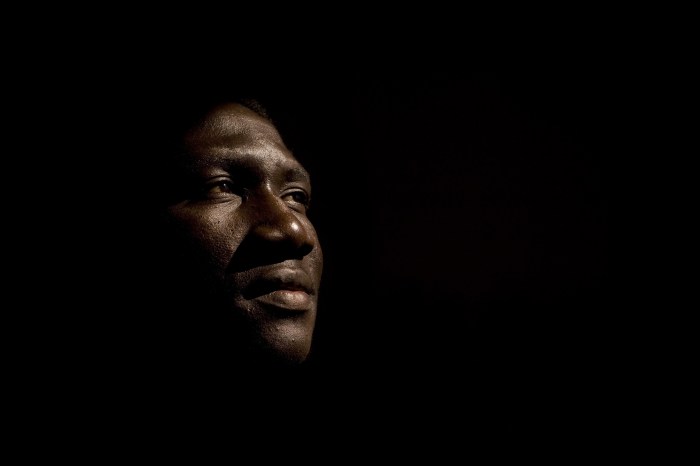
LaughingBoy:ben-white-128604-unsplash

I’ve got a question for the child in you before it leaves

Are you tough enough to be kind?

Do you know your heart has it’s own mind?

Darkness gathers around the light

Hold on, hold on — U2, 13 (There is a Light)

I glanced through the window of the classroom door and took a deep breath. I was just out of graduate school and this was my first day of teaching. Inside were 60 students tightly crammed into a room that comfortably held 40. The course was Jesus and the Gospels, standard religious education fare at Adventist colleges, but still my favorite of all the classes I have taught in the intervening 37 years.

I did not have a detailed lesson plan for the day beyond talking about the requirements of the course. I hoped that we could open up together about who Jesus was for us and what the Gospels meant to us. So I drew an inverted pyramid on the board with the widest side above and the narrowest point below.

“What is the most general category you could identify with as a person?,” I asked. “Where would you begin?”

If we teach as we were taught, then I was channeling teachers who had radically challenged my worldview since middle school. They assumed a wideness to the intellectual horizon before us that lifted my imagination and tilted my perspective. While I could not equal their breadth of knowledge I could at least match their enthusiasm for the subject.

And so I asked again, sensing how difficult it would be for someone to break that first-day silence. “Who are we, really?” I was realizing that posing good questions is harder than it seems. “This is not a trick question.”

At last one person raised his hand. “We are humans?” It was more a question than a statement, but it would do. It seemed a good place to start a religion class, with that which unites us in the most general and inclusive way possible. From there we stair-stepped our way down, from general to particular, from inclusive to exclusive, shifting categories up and down the column as we fine-tuned our choices.

We were playing out in practice the theory that S. I. Hayakawa, former semanticist and English professor at San Francisco State University—and later a U.S. senator from California—had proposed for understanding how words and labels affect our thinking and speaking. In public speaking, suggested Hayakawa, the specific is preferred to the general. His “ladder of abstraction” had, as its lowest rung, the general (Human) and its highest rung the particular (Annie). Abstractions can confuse and bore our audiences, he said, details focus their attention and imaginations.

True enough in a certain context, but turning the ladder upside down gave us a whole new perspective. As the students worked it out, we are humans first, male and female second, and from there the discussion flared out with many possibilities. Ethnicity next? Language? Citizenship?

At this point I suggested a swerve: what about religion? Where does that fit in? After some sifting and defining and a lot of back and forth, the class arrived at a line of descent that ran in Western history from the apostolic community to the Catholic Church through the Protestant Reformation, and then to the fracturing into denominational and sectarian fragments, of which Adventism, whose origin in 19th-century American millenarianism, was one. Adventism, then, was inserted at the bottom, the sharpest point, the narrowest passage to anything that might follow.

S. I. Hayakawa and his “ladder of abstraction” helps us understand the gradations of meaning between abstract and specific terms as part of clear communication. I was interested in how our moral and theological vision would change if we turned the ladder of abstraction upside down, began with the most inclusive category, and thought of ourselves first as members of the human race.

This may seem obvious to many, especially those who regard the human race to have evolved from simple life forms, a la Darwinism and evolutionary theory. But growing up in a religious community with a distinctive form of creationism, we were taught that humans were created in the image of God, fell into sin through a tragic error, and are now living with the consequences of that original willful misstep. It takes an act of God, the sacrifice of Jesus Christ, to restore humanity to the crowning act of creation, and the shortest route to that goal is to belong to a religious tradition with clear and certain beliefs that are founded on Scriptural and theological truth. Believing the right ideas and behaving according to the rules is how one proceeds through life. Thus, it is a matter of supreme importance, one that has eternal consequences, to belong to the right religious body. If you grow up in this way you identify as an Adventist first and everything else after that.

Or an orthodox Jew or a deeply observant Muslim or, for that matter, a political ideologue committed to the Party above all. What all these religious and political bodies offer is a framework within which our personal identities can be developed—nurtured even—and ultimately compressed into similar forms. There is stability, consistency, a reliable level of expectation, and a sense of belonging to a movement that can put things right. But resentment and envy can grow where contractual obligations stand in the place of the risk of faith.

Our identity is built up over a lifetime, but begins with an irritant like a grain of sand: Who am I? What am I to do? Whether it becomes a pearl or a festering sore is largely the result of a myriad of decisions, some imposed upon us as children and others carved out of our own experience as we gauge the distance from where we are to the sunlit clearing up ahead where we think we want to be.

Of the many quotes from Ellen White, one of the founders of the Adventist church, that my generation took in as youth, the one that moved me the most and has remained a touchstone for me as a teacher is, “It is the work of true education to develop this power, to train the youth to be thinkers, and not mere reflectors of other men’s thoughts,” from the book, Education.

Adopted as a general principle of education this idea has a quietly revolutionary power to it. It suggests first, that thinking is not incidental, but is the goal of true education; that no matter what the content of the course, the primary outcome should be the training of the mind for independent thinking. Second, that thoughtful reflection within a religious context is not an adjunct to religious rules and practices but is the grammar and language of one’s spiritual expression. And finally, that for all the knowledge one might gain from others, there is no substitute for personal experience.

At no other time in history have we had the capacity to know so much about other religions, cultures, mindsets, and philosophies of life. Yet, on all sides we see not openness and capaciousness, but fearfulness and divisiveness and retreat. This is not the first time in history for such a reaction, and it most certainly will not be the last, but neither is it the worst expression of this debilitating exclusivity. But we must take responsibility for our own ignorance and fear. A good start is to think of ourselves as belonging to the human family.

I remember an afternoon spent in a open-air market in Bali, when two young Balinese men and I began a conversation near a memorial to the bombing in 2002 which took the lives of over 200 people from 22 nations and injured hundreds more. A granite slab with the names of the victims now stands where the pub that was the initial target was incinerated in the blast. The two had been teenagers when the bombing occurred and knew some of the Balinese victims. They taught me some Indonesian words and I taught them some English. We talked about Hinduism, Islam, and Christianity. They talked about their families; I talked about mine. They spoke of their hopes for a university education and I shared my love of teaching with them. Nothing earthshaking, no headlines, but simply three people overcoming numerous barriers to communication for the joy of understanding another person, another culture.

Looking back over a lifetime of teaching and learning, my willingness to be open to different ideas and experiences has varied in proportion to my confidence that I am always on the road to Emmaus, and whoever my companion of the moment may be there is, as Eliot wrote, ”a third who walks always beside” us.

Having begun my teaching life in an Adventist college, with every intention of staying there, I smile to find myself through circumstance, temperament, and opportunity, one semester from completing that trajectory in a Catholic women’s college serving students from disadvantaged backgrounds.

“What you must realize, what you must even come to praise, is the fact that there is no right way that is going to become apparent to you once and for all. . . Wisdom is accepting the truth of this. Courage is persisting with life in spite of it. And faith is finding yourself, in the deepest part of your soul, in the very heart of who you are, moved to praise it.” — Christian Wiman, My Bright Abyss.

Photo: Ben White, Unsplash.com

A (Very) Brief History of Silence

NobleMan:nicola-fioravanti-266982

Emma González, one of the last of the student speakers at the March for Life in Washington, D.C., called out all 17 names of the students murdered in the Parkland shooting, and then fell silent. As she gazed out over the enormous throng on the Mall, the minutes ticked slowly by. At first, the crowd thought she had been overcome with emotion, but although tears trickled down her cheeks, she did not waver. Three minutes went by and some in the crowd raised a cheer to fill the silence. Four minutes, and by now we understood that she had a purpose in mind. Many in the crowd around me bowed their heads and wept. Finally, she spoke again: “Since the time that I came out here, it has been 6 minutes and 20 seconds, the shooter has ceased shooting and will soon abandon his rifle and blend in with the students so he can walk free for an hour before arrest.”

Silence can be a presence and a protest. Sometimes it’s a cold absence. But it is never nothing. It can make a difference to one’s spirit to know these silences.

In the Bible there is the silence of God’s darkness in the Psalms, the main exhibit being Psalm 88; there is the silence of fidelity in Jesus’ response to his captors; the silence of endurance of God toward Jesus’ agony on the cross; and the silence of awe and understanding in Revelation 8 when heaven itself falls silent for half an hour.

***

The Silence of God’s Darkness

N. T. Wright, in his book, Evil and the Justice of God, has called Psalm 88 “the darkest and most hopeless of any prayer in Scripture.” The psalm is not a theological treatise, it’s not interested in speculation. It’s a brutal eyewitness account of what it’s like to be a partner to a God who does not answer when the situation is dire.

Walter Brueggemann calls Psalm 88 one of the “Psalms of disorientation” in The Message of the Psalms. These Psalms speak of terror, the sense of forsakenness, the inexplicable silence of God. Brueggemann says, “The truth of this psalm is that Israel lives in a world where there is no answer.”

In verses 6-9, the Psalmist calls out in sorrow and anger. Not only has he descended to the Pit, but it’s Yahweh who put him there. “You have made me a thing of horror.” God doesn’t come off well here. “Do you work wonders for the dead?” cries the Psalmist. “Are your wonders known in the darkness?” Of course not.

But the silence of God does not silence the speaker. There is no atheism here or rejection of God. The speaker redoubles his efforts to break through the silence and to force God to act. As Brueggeman says, “Yahweh must be addressed, even if Yahweh never answers.”

The Psalm closes in desperation: “Your wrath has swept over me, your dread assaults destroy me.” You’d think some of this would rouse Yahweh to respond or even just to acknowledge the situation. But no. The Psalm ends as it began—in darkness and silence, but this time a darkness that is brought on by Yahweh in contrast to the natural darkness of the night.

***

The Silence of Fidelity

Jesus’ silence before those who mock him at his trial is the silence of fidelity, of staying true to his vision of God rather than escaping to fight another day. Even in captivity, Jesus regards his tormentors with assurance and humility. He will neither elaborate upon nor dumb down that which he has already revealed about the character of God and his Kingdom in a multitude of ways over many encounters.

“When violent resistance to evil is renounced,” says Jack Miles in his book, Christ, “there is no guarantee that dignity or decorum will be retained.” When the righteous are mocked in the Psalms they complain, expecting the Lord to smash the wicked in the mouth. But here God is laughed at in the person of Jesus. Miles continues: “If God has not spared himself ridicule, his people cannot expect that he will spare them. The psalmbook has to be read in a new way. The servant, as he has reminded them, is not greater than the master.”

In his brief but pointed exchanges with Annas and Caiaphas, the high priests at his trial, Jesus refuses to engage them, while pointing out that he has taught openly in their synagogues and the Temple. “Why ask me?” he says. “Ask my hearers about my teaching.” And then calmly: “They know what I said.”

“My kingdom is not of this world,” Jesus says before Pilate. “So, then, you are a king.” Jesus replies, ‘It is you who say that I am a king.’ Miles comments that “His confrontation with Pilate marks the birth of the Western tradition of nonviolent resistance.”

In his silence toward his captors, Jesus fights for the greater cause and God’s longer game. He may not have understood all the moves in this game, but he trusted that God had the upper hand in this cosmic battle. That is why Jesus could commend his spirit to God, even when he felt forsaken by God in his agony on the cross.

***

The Silence of Endurance

God’s silence toward Jesus on the cross is a silence of endurance. ‘My God, why have you forsaken me?’ Jesus cries, the prayer that God does not answer.

Jesus’ agony on the cross is mirrored by God’s agony of silence. In the Christian mythos, this is the culminating moment in cosmic history and God will not intervene. This is not about God requiring His pound of flesh in some legalistic payback scheme; it’s about revealing the lengths to which God—and God in Christ— is willing to go to show that love wins in the end over hatred.

***

The Silence of Awe and Understanding

In the clangor and violence of the Book of Revelation there comes a breathtaking moment: “When the Lamb opened the seventh seal, there was silence in heaven for about half an hour,” Revelation 8:1 recounts. “On the whole,” writes Sigve Tonstad in God of Sense and Traditions of Non-Sense, “Revelation depicts heaven as a noisy place. But silence is itself a distinctive category of response, the most spontaneous and intuitive form of reacting to the unexpected and the most trustworthy measure of the magnitude of the surprise.”

The breaking of the seventh seal rips a sharp intake of breath in heaven. There are no words. It is the sigh of understanding that all religions and faiths and peoples have longed for throughout the ages.

“After this I looked, and there was a great multitude that no one could count, from every nation, from all tribes and peoples and languages standing before the throne and before the Lamb, robed in white, with palm branches in their hands (Rev. 7:9).” It is the culmination, at this stage, of what can be experienced of God by humans.

But this is also just the beginning of what the apostle Paul looked for, the revelation of which is to “know as we are known.” For those caught up in God, entheos, the glass, so dark before, grows brighter moment by moment.

***

In the Tao Te Ching, the book of Taoism, emptiness has a place. “We shape clay into a pot, but it is the emptiness inside that holds whatever we want. We hammer wood for a house, but it is the inner space that makes it livable. We work with being, but non-being is what we use.”

Emptiness, silence — these elements in Taoism are regarded not as negation or lack, but rather a presence to be apprehended through intuition.

The Hebrew metaphysic is quite different. Emptiness and silence are to be resisted; they are an affront to the soul, a setback to the vigorous movement of the body through the obstacles strewn in our way in this life. God, having once spoken, is not allowed to remain silent, not even to take a breather out of sight in an adjacent room from the clamorous clanging of His errant children. The great Hebrew visionaries, the Psalmist among them, take their cues for meaning from the Creator: words bring objects into being and words create reality. Silence is dismissal, not conversation in another musical scale. For this we should be grateful, since it is through words that many of us live and move and have our being. What you cannot construct with your hands you can imagine with your mind and bring into being with your words.

Perhaps if it were not for the righteous fury of the prophets and the Psalmist in the silent darkness of God, we could not bear to hear from those in the Christian tradition who have learned to live in that silence—people such as St. John of the Cross, St. Therese of Avila, Thomas a Kempis, Thomas Merton and C. S. Lewis. Like the Psalmist, they did not shrink from the plain reality that for us God is often silent too and clothed in darkness.

Until we see God face to face, we must take the dark with the light, and find in God’s silence our memory and our future in faith. “Silence is the language of faith,” says Christian Wiman. “Action—be it church or charity, politics or poetry—is the translation . . . It is also true that without these constant translations into action, that original, sustaining silence begins to be less powerful, and then less accessible, and then finally impossible.”

To see and understand in this way in this life is the working out of our faith within the world’s travails. But it is also the anticipation of a much deeper understanding of God through the eucatastrophe, the ‘good downstroke or breaking in,’ of God that will reveal the knower to the known.

Photo: Nicola Fioravanti, Unsplash.com

Suffer the Children

JohnMooreGetty:19SEPARATION-jumbo

In these years of our discontent there is no shortage of outrage. If you are a Trump supporter, these are your salad days in which the outrages of the Obama administration are finally receiving their comeuppance. If you are not a Trump supporter, but now find your moral sensibilities being dragged behind a pickup with three rifle racks across a landscape of cacti, rocks, and boiling sand, then there is a certain relief in shouting out loud. It is cathartic. I am in the latter group. You are free to leave at this point; no hard feelings.

I mention that it is catharsis only because so much has already been written and said and analyzed and disseminated about the Trump administration’s policy of tearing children away from their parents at the border. I am writing because thinking out loud helps me understand what is important to me, and more to the point, how I can express a spiritual faith in times like these.

There are a few moral precepts that one should be able to affirm without agonizing over. Slavery, the rape and abuse of women, and the abuse of children are among them. Stating them thus does not exclude other precepts nor should it be considered a knee-jerk reaction without thought and reflection. Rather, these are simply part of one’s moral landscape, familiar markers that commemorate a covenant between God, oneself, and others, markers that remind us of the (now) obvious conditions of being faithful to God, responsible to one’s society, and true to oneself. These are also three reasons for moral action, as I understand it.

The first one is that God asks us to refrain from certain actions and to do other actions. For people of faith, whatever form their god may take, this is often enough reason to act. It is a powerful reason, and for some does not require any further reflection.

Even some who are moved by it still find themselves intrigued by Plato’s question: are actions right because the gods approve of them or do the gods approve of them because they are right? According to some lines of the historical discussion, if we do them because the gods approve of them we may run the risk of blindly following some arbitrary divine commands. What if your gods are tricksters, irresponsible, forgetful, or otherwise not to be trusted? On the other hand, if the gods do them because they are right then while that is a powerful vote of confidence in the moral justification of the actions, it makes the gods look weak. In the first case, the gods have arbitrary and perhaps capricious power; in the second case, not enough power to make them worthy of worship.

Most historical religions have a moral structure and some even have commands for meeting moral and religious expectations. We could chose to think of these commands as arbitrary, but then we would have given up any semblance of trust or even of thoughtful reflection on our relationship with our god. Again, it’s a matter of trust: we do these things not only because our gods ask us to, but also because doing them is an exercise of our moral freedom.

The second reason is to be responsible to one’s community—and again, we may choose to act for a number of reasons. We may wish to avoid jail time if we break the rules; we may desire to be in favor with our neighbors, our friends, and our families (Adam Smith called it the ‘approbation of society’ in his Theory of Moral Sentiments); we may want the rewards that come with good behavior or we may genuinely want to contribute to the well-being of our society. These are all good reasons for doing the right thing, and as many have pointed out, one does not have to be religious to accomplish them. For many people today, ethics is the new religion.

The third reason is to be true to oneself, a piece of advice that can be traced back at least to Aristotle. It’s not hard to see that either or both of the previous reasons could give us a sense of ‘self,’ but some people will immediately get diverted into questions of whether we have a self or not, and if we do, how much of it is the result of genetics plus environment. Since most of us act as if we are selves and treat others as if they are selves too, we can leave the questions to others and try to think about whywe ought to be true to ourselves.

Classical ethical theory invokes Aristotle here (practicing virtue aligns us with our true end or telos , which is to flourish) and Kant (do the right thing because you respect yourself and others and you’d want the same respect for everyone else).

Being true to oneself not only involves respect for oneself and others, but going deeper in and farther back to find the highest regard we can have for the human being.

In an essay on goodness, Francis Bacon (1561-1626) examines the relation between habit and nature. “Goodness I call the habit,” he says, “and goodness of nature the inclination. This, of all virtues and dignities of the mind, is the greatest, being the character of the Deity; and without it man is a busy, mischievous, wretched thing, no better than a kind of vermin.” Bacon believes that we achieve a “habit of goodness” through “right reason,” but that just as there is in some people a natural inclination toward goodness and a willingness to help others, there is in others a “natural malignity” that drives them beyond mere irritation with others to envy, anger, and selfishness.

Such people revel in the calamities of others. They are like flies buzzing around a raw wound, says Bacon, and rather than bind up the wounds of those who are suffering these misanthropi enjoy the misfortunes of others. “Such dispositions are the very errors of human nature; and yet they are the fittest timbers to make great politics of.”

Having been the victim of some palace intrigues in the courts of Elizabeth I and King James I, Bacon knew from first-hand experience how crooked the timbers of politics could be.

The policy of the immigration hardliners in the Trump administration to separate children from their parents has been roundly condemned by congressional Democrats and some Republicans. Immigration-advocacy groups, lawyers, children’s rights organizations, psychologists, educators, and doctors, all have been scathing in their criticisms. The Catholic Church has flatly called out the practice as immoral. Melania Trump has expressed her horror at it and former First Lady Laura Bush, diffident to a fault, has written an op ed in which she called the policy “heartbreaking.” Even Franklin Graham, who refuses to call out Trump on anything, has characterized the practice as “disgraceful.”

And yet here is Jeff Sessions, the Attorney General of the United States, whose shrill pronouncements increasingly sound like the cries of a desperate man, fiercely clinging to his “zero-toleration” position. When Christian authoritarians run out of options for justifying their immoral policies and laws they reach for the fire extinguisher they think will put out the blaze—Romans 13—in which the Apostle Paul advises his readers to obey the laws because the authorities have been put in place by God. Read out of context these verses (Romans 13: 1-7) have been used to justify slavery, war, apartheid, and systemic evils of all kinds. Marilynne Robinson drily comments in her recent collection of essays, What Are We Doing Here?, that “Indeed, unread books may govern the world, not well, since they so often are taken to justify our worst impulses and prejudices. The Holy Bible is a case in point.”

Read in context, these verses are sandwiched between the marks of a true Christian—extending hospitality to strangers, living in harmony with others, and overcoming evil with good—and showing love for one another by loving our neighbors as ourselves. Paul is pretty clear earlier in his letter to the Romans that every person, Christian or not, knows in his or her heart the basics of what is right. The implication is that Christians try to do what is right in every situation out of love for the neighbor and respect for that which God has created. The assumption is that good rulers and good laws have the blessing of God; the knowledge that there are bad rulers and worse laws is so obvious that it does not need mentioning. God’s people are expected to know the difference and to live by their consciences accordingly.

People of faith who look to the Bible to understand the function of principles in shaping our ethics and actions see that caring for children is pretty high up on the hierarchy of values for Jesus. In the gospels of Matthew and Luke Jesus makes the point that people make mistakes in caring for children, but woe to the person who deliberately hurts a child. “If any of you put a stumbling block before one of these little ones who believe in me, it would be better for you if a great millstone were fastened around your neck and you were drowned in the depth of the sea (Matt, 18: 6).

With his characteristic irony and pointed hyperbole Jesus lays it down that crushing a child’s faith and hope is a deadly sin. These are things that everybody is expected to know and abide by. As Bono says, “Jesus said ‘Suffer the children to come unto me,’ not make the children suffer!” But the fact that Jesus speaks so urgently means that this fundamental precept of human existence, caring for the children, was alarmingly ignored in his time. So it has ever been. And now we’re doing it again with howling cynicism and hypocrisy by appealing to the sanctity of the rule of law and the authority of God and scripture. Except that it’s literally not a law but a prejudice, and Jesus condemns such actions in the strongest possible terms.

In the increasingly fractious and twisted arguments over immigration one thing should be clear: these children have the most to lose right now and in the years to come. And as for us adults, it’s time to throw off our millstones.

Photo: John Moore/Getty Images

Consider the Lilies

FlowerField1:josephine-amalie-paysen-97460-unsplash

“Consider the lilies,” says Jesus.

Is it a demand, like “Go and learn what this means, ‘I desire mercy, not sacrifice?’” Or is it an invitation like that extended to Matthew who, as a taxman, was sitting in his booth collecting the blood-money from his people to be handed over to the occupying Roman force?

Jesus is walking along, says the Scripture, and he sees Matthew in his little booth, like those photo booths you’d see in parking lots of grocery stores, not even as big as a restroom at a Phillips 66 service station, and he just says, “Follow me,” and “he got up and followed him,” says the Gospel according to Matthew (no relation).

This invitation comes to Matthew as something of a command, for how else to explain leaving a job in which the money is made so easily (the size of the booth notwithstanding), just a matter of slipping an extra 10 percent on the standard tax so the Empire gets its money, you get your slice (in addition to your paltry salary), and everyone is happy—well, everyone with the exception of your people who await with dread and resentment the next shakedown at your command. If you didn’t mind being a pariah and knowing that every face turned toward you was either coldly indifferent or seething, then the job had its advantages. A pariah you might be, but a rich pariah you were, and that almost made up for being alone.

The lilies, then.

“They toil not, neither do they spin.”

***

Our work, what we do for most of the life we have, how do we see it? Is it a command or an invitation? Were we sitting in the little booths of our adolescence, bored and avaricious, waiting for a summons that only we would know when we heard it? Did we think the summons would be dispersed in general to everyone like us around us or would it single us out—we alone—lifted up out of the ordinary on the strength of a talent long buried like a bone in the garden, a talent perhaps, that we had ourselves buried for shame for even imagining it was our talent?

Or did we back into the spot, the one available at the time, that would become our place for so long that the weeds would grow up around the tires and the seasons wear down the frame as it settled?

Our self-image, like a Polaroid snapshot, emerges gradually from black to gray to color as we phase through our work life.

We imagine ourselves to be vaulting over all obstacles, achieving that which others have despaired of reaching, or bending down kindly to raise up those behind us who are slipping on the rungs of achievement. Suddenly there is no one ahead of us, the field is clear, we have been called to lead! We turn with an encouraging shout, only to find that the others, leaders and followers, have calmly dropped back. They regard us from a distance with pitying looks. We are alone.

We do not recognize the person we are until we see ourselves at work in the vocation we believe ourselves to be called to. Then we wonder if the gap between perception and vision can be bridged. We give ourselves to the work, glancing to the side at colleagues and up ahead at those who beckon—they make it look so effortless. We feel like imposters. It is in those moments that a fundamental truth is revealed to us: we have entered a conversation that precedes us by thousands of years and will continue after we cease to speak. It is possible that by listening we may learn and by speaking we may remember what we have learned. In speaking our own minds we may find that we have also spoken what others have thought but could not say. With Emerson we may be like the one who is “happy enough if he can satisfy himself alone that this day he has seen something truly.”

***

Matthew followed Jesus, seemingly without hesitation. Was it a relief to shuck off the taxman’s cloak? He gave up routine, the comforting groove of repetition, for day-to-day dislocation and the tingle of the unknown. In a moment he jackknifed himself from solitude into a band of brothers, discarding ambition like a fraying belt and making no plans beyond the setting of the sun. What his former life had been was the mention of some nudges and terse comments at first, but then that arc of his life evaporated and was gone. Filled with a strange elation, he fell into the rhythm of the days, feeling his stride lengthen and his horizons widen. What was he now? The first time someone asked, “Where is your master?,” he almost laughed before he realized that he had become a disciple, a follower.

“It is precisely the most solitary people who have the greatest share of commonality,” said Rilke. “The one who could perceive the whole melody would be most solitary and most in the community at once.”

Strangely, what Jesus offered was a hallowedness that made every action seem both familiar and sacral. There was an inwardness about him that lingered even when he smiled. Matthew found it compelling, a sense that even as Jesus was among them, sharing meals and stories and the hard ground under the stars, he was yet just beyond their reach.

His intensity was infectious, if exhausting. “I came to bring fire to the earth, and how I wish it were already kindled!” he cried out. He acted like a man whose life was converging with a future that was accelerating toward him at the speed of light.

The next day they were moving through a springtime field awash with flowers, heading north following the line of hills to the west. “Consider the lilies,” he said, trailing a hand through the blossoms as they walked. “They neither toil nor spin.” They didn’t need to toil to justify their short time on this earth. They simply were: they were their own reason for existing. As brief as their lives were, he said, God took care of them. Wouldn’t He do the same and more for you? God knows what you need.

That night he said to them, “Strive first for the kingdom of God and his righteousness. Don’t worry about tomorrow.” He looked round at them, quizzical faces turned up in the firelight. “Tomorrow will bring worries of its own. Today’s trouble is enough for today.”

And now Matthew is considering the lilies, even as he turns over all that Jesus has said. He thinks about those for whom life is one hard-scrabble decision after another, those who could never imagine that the story provides an excuse for blithe idleness. For them, subsistence is necessity and tomorrow is never guaranteed. For them, faith is all the guarantee they will get—and all they will need.

He decides it is an invitation: “Consider the lilies!”

Photo: Josephine Amalie Paysen, Unsplash.com