How We Prevail on Earth

LightShadow1:ian-espinosa-348171

They were astounded at his teaching, because he spoke with authority. In the synagogue there was a man who had the spirit of an unclean demon, and he cried out with a loud voice, ‘Let us alone! What have you to do with us, Jesus of Nazareth? Have you come to destroy us? I know who you are, the Holy One of God.’ — Luke 4: 32-34

If you can believe the sign in the parking lot, the church is a demon-free zone. Just who certified this isn’t exactly clear. But up to now there’s never been a demon there in all the years I’ve been attending, at least not one that was visible.

If I’d wanted to see a demon, the church would be the last place I’d go. Yet there it was. And where there is one, there are many. It’s like switching on the light in the kitchen and seeing a lone cockroach scuttling across the floor. You just know there’s never just one.

That man was carrying one in his gut like a parasite. That’s the only explanation I can think of. To look at him you’d never think he was host to a Legion of devils. In fact, he was the one who talked the most about them. “There could be one among us today!” he’d exclaim. You could hear him out in the narthex, grilling the visitors. I guess he thought they could wipe their feet before they came in and that would somehow do the trick.

Do we think the demons avoid the church because there is some magical aura that rebuffs them, some force-field against which they cannot hurl themselves? Don’t be silly. A church is like any other building, just quieter when it’s full. Not much happens at our church; perhaps that is why the demons have always left us alone.

But he wouldn’t let it alone. “We’ve got to stand together,” he’d say. “All of us in unity. If we give the Devil an opening he’ll crack us like a walnut. If you harbor thoughts otherwise you will not stand in that day! You’ll be the one who lets the Devil in amongst us. Do you want to be that person? Really?”

In a meeting someone finally said, “Pastor, why do you think we’re demon-bait? Have we ever given you reason to think we are?”

“Can you prove you’re not?” said one of the men next to him. “Do you really think you’re qualified to know the signs? Don’t you think the best thing is to trust those of us who’ve had some experience in these things?” He waited.

In the silence the pastor cut in. “We’ve argued about this long enough,” he said with a frown. “There are doubters among us.” He pulled out a form and laid it on the table.

“We’ve got to be unified,” he said. “We don’t have any time to lose. I want you to put aside your doubts and join me in a pledge to stand against the Devil and his hordes. That’s what this church has always stood for: unity for the mission.”

He tapped the form in front of him: “This is your day of decision. Sign this or forfeit your right to speak.”

“But you can’t do that,” someone protested. “Besides, signing a piece of paper doesn’t prove anything. What matters is what we decide in our hearts. It’s between us and God.”

The pastor stood. The late afternoon sun poured redly into the room, casting him in both light and shadow. His hands balled into fists.

“Do not oppose us,” he said softly.

Photo: Ian Espinosa, Unsplash.com

Another Homecoming

Glencoe.jpeg

And you know it’s time to go

Through the sleet and driving snow

Across the fields of mourning

Light in the distance — U2, A Sort of Homecoming

In the parable of the prodigal son, it’s the prodigal who gets all the glory. It’s an old story, played out across countless families, in every small town, to the tune of heartbreak in a million hearts. He’s the badass boy that all the girls want, the one who brushes off the worshipful without a sideways glance, who gets his ‘Vette with the money that’s coming to him and roars out of town for the city.

He’s every arrogant kid who struts into the stage lights, full of himself and full of life, aching to make his mark by sheer force of need, daring himself farther up above the abyss like some flaming Icarus, until desire cracks full force into indifference and he plunges.

I could have told you so.

I’m the one who stayed behind, the older brother whose diligence was mistaken for acceptance. The one who was expected—not in so many words—to pick up the slack and obediently plow the fields until sunset every day. Now that he was gone there was an understanding that everything left would be mine when the time came. Until then it was mine to lose; if I didn’t work it there would be nothing left to claim.

* * * *

In Rembrandt’s painting, “The Return of the Prodigal Son,” the elder brother stands alone, isolated in a pool of light, his stiff resolve drawing him up and into himself. He stands on a platform, the diagonal of which bisects the plane and separates him from his father and brother. Although only a single step forward would put him on the same level as his brother, we sense there is no power that could induce him to any movement except to withdraw further into the darkness behind him. The eldest son is all verticals; the father and the prodigal are rounded, bent toward each other at awkward angles, the one falling into the embrace of the other and both in light. On the elder brother’s face, there is sorrow, hurt, and anger. This is the moment he has played out in his mind countless times; now that it is here he is mute and paralyzed.

* * * *

I know what the people in the town thought of me. They would tell you that I was the resentful one, angry because my brother took off to live for song and women in a far city. In this version, I would have been long gone—even before him—if I had had the balls. But that’s not me.

The story has a life of its own now, and there is little I can do to change it in the minds of those who hear it. I am not a man of words. Even this is difficult to express, but I can only tell you honestly what I held in my heart all that time he was gone.

I loved my brother and I knew why he left. I knew he would leave and I knew there was nothing any of us could do to make his leaving seem right. He would take his leave, to put it quaintly. He would take it and run with it and he didn’t give a damn if anyone got hurt in the taking. But frankly, there was nothing for him here, and if he could play out his talents on a larger stage, well, more power to him.

When I’m working in the fields I’m always thinking. I’m thinking about Cain and Abel, Jacob and Esau, Castor and Pollux, James and John—the “Sons of Thunder,” as Jesus called them. What I do you might not call prayer, but I think of my brother and imagine him in his life. I hope for his safety at the very least, and I hope for the enlargement of his spirit.

He returned in winter. The days were bitter and short; it was all I could do to get the chores done in the daylight. That year we had more snow than usual and more days of flying sleet and slosh. I was up to the hills out back, seeing to the sheep, when I caught a glimpse of a figure stumping along the road to the house. As I strained to see through the rain and sleet, I saw the old man in his pea coat hobbling up the road. They met in the road, their figures melding together in the gathering dark, and they turned toward the house. By the time I was down the hill and coming through the upper pasture all the lights were on in the house and smoke was pouring from the chimney.

*  * * *

In Rainier Maria Rilke’s retelling of the story of the Prodigal Son, the young man returns home to the welcoming embrace of his family. They hover, hanging on his every word, their faces shining, laughter quick in their throats. He retreats to his childhood room, tired and pressed on every side.

In the morning, before light, he gets up, quietly steals out the back door, and runs across the frosted fields as the sun comes up. We know he will not stay; he is drowned in love and has no defenses against it. He feels himself to be disappearing and knows he will lose himself if he doesn’t leave.

* * * *

His story came out over the days as we worked together in the fields and the barn. I didn’t press him for the details. I knew he couldn’t hold them back. Whatever my brother was feeling was written on his face and there was little in his actions that winter that I could not have predicted. So when he came to me one night in the early spring, I knew he was leaving.

Now that our father has passed on, the farm is my responsibility. I could no more leave than my brother could stay. But I love the land; we each find our level. I’ll be here when he returns.

(Photo: Unsplash.com)

Live in Light

SmilingLight:yingchou-han-241463.jpg

It begins with light.

No, rather it begins with darkness, but the Light shines in the darkness and the darkness has never put it out. He came to his own people — to us — but we were in darkness and the darkness was complete, for in us there was no light.

And I looked, but I could not see, until he mixed up some clay and pressed it on my eyes.

“What do you see?” he asked, and waited. I could hear the cicadas droning in the trees, felt the blood pounding in my ears, a dog barked somewhere in the village, feet shifted near me and I heard the murmur of voices.

“I can see . . . people,” I said, and cleared my throat. “But they look like trees. Nothing is clear. . . Yet.”

At that, he smiled. I saw him smile! He pressed clay on my eyelids again and I felt the cool touch of his hands on my face.

“And now?”

At that, the light poured in and his face snapped into focus. Behind him I could see other faces, people whose bodies cast hard shadows under their feet, for the sun was almost directly overhead and the cicadas filled the silence under the brassy sky. I closed my eyes, for the light fell like shards of glass and I called out to my friends because I did not know what they looked like, but when I heard their voices, gasping and laughing, I knew where they were and I laughed too. The darkness, again, was familiar, but I wanted to see and to see my friends, and I opened my eyes. They were around me, brushing the mud smears from my face, and by their voices I could see who they were, finally.

It was by hearing that I saw.

He told stories and we listened. To be honest, most of it went right over my head.

“No one after lighting a lamp hides it under a jar, or puts it under a bed, but puts it on a lamp stand, so that those who enter may see the light. For nothing is hidden that will not be disclosed, nor is anything secret that will not become known and come to light. Then pay attention to how you listen; for to those who have, more will be given; and from those who do not have, even what they seem to have will be taken away.”

Everybody knows that a lamp is for light. Without light it’s just a piece of clay. That much I knew.

“I am the light of the world,” he said. So this is what he was doing: he was lighting the world and he would not be hidden. The light is here, right now! Everything will be seen for what it is; the secrets that people have hidden will be revealed; all will be in light. Pay attention! If you can truly listen you already have much and those who can listen with attention will be given much more. But if you cannot listen, if your attention is only on yourself, and if what you want to say stops up your ears, then you will lose even what you have.

That came after the parable of the sower and after we asked him to explain. Those who hear the word and hold it fast with an honest and good heart are good earth, good humus, good humans. Holding it fast with patient endurance, that’s what it takes. It begins with hearing the word and seeing the light.

“So let your light so shine among them, let your light so shine,” he said. “Let your light so shine among them that they may see your good work and may know that it comes from the Father of lights.”

And we who sat in darkness saw a great Light and that Light was the light of the world.

(Photo: Ying Chouhan, Unsplash.com)

Elaborated Spontaneity #8

Committed to Memory


SunriseMemory:eric-ward-341172 copy.jpg

Our global story is not yet completed,
Crime, daring, commerce, chatter will go on,
But, as narrators find their memory gone,
Homeless, disterred, these know themselves defeated.
— W. H. Auden, XVI from “Sonnets from China”

I recoiled in horror at the scenes coming out of Charlottesville, at the torch-lit faces of the marchers, indistinguishable from the clean cut young men of Nazi era photographs. There was the same glittering intensity, the straining throats and clenched fists, the bodies taut with anger, the adrenaline stiffening their limbs. Then came the images of the car plowing into bodies, bodies that were tossed and flung up into a frozen moment in which we could see every detail suspended in time. Did that man sprinting to the left make it to safety? Where did the body land that was upended and flailing in the air above the car? Did the driver think of his mother in the moments before impact? Was his face contorted with hatred or was he a masque of cold ruthlessness?

In a summer redolent with memories of World War II, it is astonishing to see Nazi flags and salutes in the streets of Charlottesville. These are self-identified “blood-and-soil” foot soldiers whose primary myths reek of violence, hatred, and mayhem. Separately, these people might be merely obnoxious and irritating: together they are more than the sum of their parts. Together they are the dark, atavistic, blunt force which has caused such trauma to the body politic through the centuries.

It was a spiral of violence that inevitably hit its crescendo in Trump’s first remarks. If ever there was a time when the better angels of our nature should have been hovering over the president, this was it. In a moment of genuine grief and justified anger he could have opened his heart to the nation and called out the evil so evident before him. He could have played the man and unequivocally denounced by name the self-designated forces of hatred and racism. He could have exercised leadership and called us to remember our higher values. But he didn’t. When he finally made a fuller statement some days later it was delivered with all the empathy and expression of a child forced to apologize. And then, in a press conference which stunned even the commentators at Fox News, he raised the moral equivalency stakes even higher. Asserting that there were good people among the Nazi marchers he charged that the counter protestors, many of whom were clergy leading in nonviolence, were just as violent as the white supremacists, the KKK, and the Nazis, who poured into the city from all parts of the country for the protest. It was a bridge too far, even for some of his allies who had gritted their teeth through the interminable months since he took office, and by mid-week after the protests enough CEOs had resigned from the president’s economic advisory councils that he abolished them.

It is clear that this president cannot be the moral leader that the position calls for. He has chosen that which benefits him personally over that which the country needs in order to rise above this present shame. The President’s unwillingness to call evil by its right name is a trigger warning for all of us. It means we need to face up to the racism that pervades our system and to recognize that no one—none of us—is free and clear of this poison.

* * * *

Racism is endemic to human nature because it feeds our fear; if we understand the fear we may have a chance to rise above this—but only if we are both constantly self-aware and consciously focused on a love for others that can endure the fire. To rid ourselves of this poison we need to reflect, renounce, and announce.

We reflect on our past—not just our own individual past, but that of our country and our world. We remember through history, scripture, drama, poetry, film, music, and art the painful stories of our long love affair with violence. We recognize—re-cognize—that any of us could be the face of violence and evil for another person.

We renounce our fear and our inability to see others as people like ourselves. We have to set aside our gut reaction to dehumanize others when provoked. And we have to put away childish thoughts about stamping out evil by killing the millions of us who are tainted by it. Evil is a cord that runs through all of us, tying us and our enemies together in a chain of mutual destruction. The way we cut the cord is to recognize it in ourselves and give ourselves over to God, Allah, a Higher Power, whatever we call that Being which is being itself and which gives us life.

We announce to ourselves the commitment to the effort and struggle to love each other. It is a struggle, mostly because the easiest thing is to ignore the humanity of those we fear and hate. Making that claim each day to ourselves makes it real. In a strange reversal this is one case in which “saying makes it so.”

* * * *

We do not live in the present only, but always with a glance over the shoulder to our past. When we are not simply preoccupied with ourselves we also look up ahead to where we think we ought to be. This is how we make and remember history, not just “one damn thing after another,” as Henry Ford is reputed to have said, but a perspective on human action that involves making order out of our myriad choices. We live at once in these three worlds of past, present, and future, although we scrutinize them separately.

The present moment is indefinable: is it truly a “moment” or does it stretch like putty to touch both the past and the future? The question matters because our always-on social media shrinks the present to hours, sometimes minutes. “Here is the latest on the stories we are following right now,” says the news host, genially taking us by the hand before shoving us off the curb into heavy traffic. Thus we are ceaselessly borne downriver, to change up the metaphor, desperately clutching at anything we think will define and preserve the moment we just saw.

It is memory that keeps us alive and alert. Memory that functions to string together the millions of droplets of time that make up our sense of continuity and that define the boundaries of our experience. Memories of our personal history and our collective histories. Augustine likened memory to a long hallway with rooms off to each side, each one containing moments that defined us in time. Those moments are who we are today, but not what we may yet become.

Let’s not forget who we are, who we wanted to be as a nation of people. We remember when we write it down. Writing it down becomes a commitment to remember and to be accountable to ourselves and others and God. “I want to enact the truth,” said Augustine, “—before you, by my testimony; and, by my writing, before those who bear witness to this testimony.”

So . . . listen, reflect, write, and speak out. Start a blog, keep a journal, write a paragraph of encouragement to your friends on Facebook every day. Share what you write with the rest of us; in the writing we will keep the memories of these times alive for ourselves, those around us, and the people we are still to be in the future.

(Photo: Eric Ward, Unsplash.com)

Resist and Love

GirlResist:allef-vinicius-305443

“Something there is that doesn’t love a wall,” says Frost, and thus rouses the silent kid in her ninth grade English class who finds in the poet a resistance fighter. At the molecular level, within the genetic structure of the body politic, the germ of resistance can be isolated, understood as a trait that our American forebears had in abundance and we would do well to emulate.

We resist when we’re young because we don’t know what we’re capable of; we resist because without something to push against we lose all feeling in our senses. To be someone we have to bump up against something, push something around, if only to find the edges of the universe we find ourselves floating within.

“The simplest idea of power,” says James Hillman, “supposes that for work to be done, there must be something that resists.” If nothing else, resistance makes power possible, even something which can be measured.

But we measure ourselves by what we’re not going to put up with anymore, by what rights we are owed, by the amount of pushback we get when we bend the world to our will.

We resist, therefore we are.

But this is tenuous and we know it. We are living in times when identities are thrown like knives. “I am this!” “You are that!” “They are not this, not like us.” “We would never do that, not like them!” We peer through our family and tribal filters that polarize the light around us by cutting out the interferences. There is precedent.

A man named Saul, a bona fide terrorist, riding to Damascus with a license to apprehend and arrest Christians for their torture and death, is thrown from his horse, blinded, and pinned to the ground by a bolt of light and a voice from the heavens.  The King James Version puts it best:

“And he said, Who art thou, Lord? And the Lord said, I am Jesus whom thou persecutest: it is hard for thee to kick against the pricks.”

Saul had been kicking against the pricks all his life and the pricks had returned the favor to the extent that Saul could easily have passed for one himself. Modern translations of the Bible have lost the latter phrase, but we can know that Saul was resisting with everything he had, kicking away all the faces of those he carried in his conscience day after day. “You have lost yourself,” they whispered. “You must change your life.”

And change he does. Resisting the dead weight of primitive prejudice, this Saul becomes a Paul, rebounds from his blindness to persuade his former victims that while he once was blind, now he sees. Now he’s fighting—not against flesh and blood—but against principalities and powers, unholy powers in high places who build their walls.

Years later this Paul is still resisting. He knows plenty about fighting the good fight, but he also knows a lot about love. Look, he says, now I only know part of the story, but someday I will know as fully as I am known. Faith, hope, and love, he says, these are the essentials, but the best part is love. You must change your life. We don’t even know how to pray for change, but the Spirit prays within us, and in all things there is something working out for good to those who believe that goodness still lives in the world.

We may call this Truth or God or Love; in the end they are quite the same.

Elaborated Spontaneity #5 (Photo: Allef Vinicius on Unsplash.com)

God Incognito


“I think, therefore I am,” says Descartes, and thereby overturns centuries of philosophy past. He imagines a dark spirit with infinite powers to deceive, who could turn lightness into dark and cause one to doubt the very ground upon which one stands.

Suppose, suggests Descartes, that I am mistaken about the ‘hereness’ of my body, about the realness of the world ‘out there’, about the existence of God? Suppose that every shard of reality I cling to is an illusion: how would I know? How do we claw through the fog? If it’s all wisps and shadows, how will we know when our little bark has run up on the beach?

He edges out on the high wire, squinting hard at the far post, determined to reject everything except that which he could not doubt. And what he could not doubt is that he is the one doing the doubting, and that those who doubt their existence must exist in order to do the doubting. ‘Cogito ergo, sum’ — I think, therefore I am.

It’s a grand and audacious mind game that Descartes is playing. It’s an axiom dressed as a revelation, a discovery of the self. He invites us to doubt, but he never really doubted anyway. What sets Descartes apart, though, is that he’s given personal experience and his own thought as much authority as conventional wisdom. Find the truth, he says. Think for yourself; argue it out in your own head. Be the master of your interior world. You think, therefore you are. And therefore, is God.

What do we mean when we say we “know” God? Do we “know” the wind? Do we “know” the darkness within the cloud? Do we “know” the cry of our own voice caught up and away in the wind and the cloud? This will not suffice; there must be more.

* * * *

The mild-mannered parishioner two pews over, his attention wandering during the homily, moistens a finger and doubles the pages of his Bible under his thumb. He has an idea to look for God in the Old Testament, but not in the bloody chronicles of genocide and terror. Ecclesiastes appears, but he remembers something about everything as vanity. He frowns: he needs a handhold, not a slippery slope. The Psalms are familiar — he’ll pitch his tent there for awhile in hopes of a well-known verse or two.

“Answer me when I call, O God of my right!,” shouts the ragged singer of the Psalms. He rages, he twists, he cries out; he will stitch up one star to another if he has to and create a zip line to Yahweh. Our parishioner stiffens in the pew; no one should talk to God like that. He reads it again, his finger tracing the words. He whispers it to himself, bending over the page, eyebrows lifted. He imagines ravens wheeling against the desert sun, a cave behind him, the whorl of a desert dust devil swirling closer. He raises an arm against the sun and the shriek of the wind, the ground rocks beneath him, and he hears it, a whisper: “I am.”

“Yes,” he says out loud. “Yes, you are.”

Elaborated Spontaneity #4 (Photo: Clarisse Meyers, Unsplash.com)

The First Church of Common Mysteries Now Open


CHurchLavender:cassie-boca-290902.jpg

(Photo: Cassie Boca, Unsplash.com)

Religion gets its knocks these days as the perpetrator of all things evil, the invention of adults who never outgrew their childish fears, the condemner of all that’s spontaneous and upgrowing. A lot of that is true, and when we who can still remember our conscription into religion somehow find ourselves passing as adults and still floundering gracelessly around in the warm waters of the faith we first were baptized in we may be forgiven for our slack-jawed lack of defense. Some of religion, like manners and clothes, is a matter of habit, and habits can free us up to think about important things, so we may be reluctant to pass off a habit that so far has not resulted in serious injury or loss of footing.

But perhaps, like a man whose waist has outgrown his trousers, our boundaries to religion are too small, too much the skinny jeans rather than the comfort waist regular cut with a smoosh more room in the seat. “Were we to limit our view to it,” says William James in The Varieties of Religious Experience, “we should have to define religion as an external art, the art of winning the favor of the gods.”

It’s so much more than that, he says. While there is the institution of religion, the churches, the ecclesiastical hierarchies, vestments, holy books, and, of course, the systematic theologies, commentaries, councils, and connections, all of that is external, says James, yet in no way less significant for all its wear and tear through the centuries.

But the internal, the deep inwardness that comes when we fall into a reverie waiting for the light to change—that is not to be trifled with nor ignored. “The relation goes direct from heart to heart,” says James, “from soul to soul, between man and his maker.”

We have these holy moments; they drift up like dandelion seeds before us and we might not even see them, focused as we are on the flotsam of our days. Some people just don’t have the knack for religion, says Karen Armstrong. Others can’t live without it. The ones who can’t seem to hit the keys may not get to jam with the others at first, but they can find a riff if they’re willing to practice.

“Beauty is nothing but the beginning of terror,” says Rilke. “Every angel is terrifying.” A star is waiting to be noticed, a wave rolls toward us from the past, a violin yields to our hearing as we pass under an open window—all these are intimations of God if we are awake. Will we practice noticing?

“All this was mission,” declares Rilke. “But could you accomplish it?”

This is what grace is about: the courage to notice the common mysteries.

“Truly, we live with mysteries/too marvelous to be understood,” says Mary Oliver.

“. . . Let me keep my distance, always, from those

who think they have the answers.

“Let me keep company, always, with those

who say, “Look!” and laugh in astonishment,

and bow their heads.” (Mary Oliver, “Mysteries, Yes”)

(Elaborated Spontaneity #3)

Elaborated Spontaneity

RoseWhite:sebastian-molina-fotografia-101308

This is the first post in an ongoing experiment in quick writing, usually 500 words or less, on a spiritual theme, in which I play with metaphors, images, and concepts from the Bible. The second one follows, called ‘The Light.’

Imagine an elaborated spontaneity in which we juggle up a new idea, toss it around, look at it in the light, and set it down for a minute. In that short minute we ask ourselves what other ideas could connect here, what memories, what experiences, what chips of light and dark could be struck off in the shaping of it. Then back to the tossing from hand to hand–another way to see how the idea plays in this context and that–does it play or does it work? Does it lead us into paths of imagination for its own sake or does it drag us through the valley of the shadow of the death of hopes?

This is “elaborated spontaneity,” the ability to elongate and stretch and pull and twist a modest idea, almost like we are roping up pasta from scratch into long, fine strands by looping it, flipping it, folding it, twirling it into something delicious, savory, and gifted to others and ourselves, in the moment of creation, more than we thought and less than we touched; a faith that begins as a mustard seed and by chance (maybe by God’s nudge) skitters into good ground, puts up a shoot, shoots up into a shrub, and gathers to it the birds of the air. All this from a simple act of not looking away when our attention is caught like wool on a rose bush.

Ask, and it will be given you; search, and you will find; knock, and the door will be opened for you.

(Photo: Sebastian Molina, Unsplash.com)

Elaborated Spontaneity #1

The Light

LightWorld:aziz-acharki-285336

In the beginning was the word, and boy, was it ever a good word!

That word came from the Wordmaker and the Wordmaker was God, and all the words that rose up from the Wordmaker’s mouth did what they were meant to do, and the world sprang into light and that light was the light of the world.

There were times when the light could be seen like lightning from the east to the west and—truth be told—there was one who saw something like light falling from heaven, but no one saw where it plunged into the sea, if it did. It may still be falling far below that line on the horizon where the sea and the sky blur up together.

There came a time when the light burned low, like the light in a cat’s eye, and you’d have to be looking in the right place to notice it. It held there, but then it was flickering and wavering and almost guttering out and I remember in that moment that the one up ahead of us suddenly cried out, “My God, why have you forsaken me!” just as it fizzled and went out with a pfft.

It seemed an eternity in a darkness so absolute you couldn’t see your hand in front of your face—and there was no sound—the words had simply been crushed with a heavy hand across the mouth. Then—glory!—the light curled up and Someone cupped it close in a hand and it rose like a plume, almost perfect, and we held our breath, but it steadied and jumped and suddenly we had our own lights, each of us, above our heads, like a breath of benediction.

And you may be wondering just now why the light of the world is not a torch thrown high showering sparks, or like a pillar of fire by night or—hell, let’s go for the brass ring—why the light of the world is not a towering inferno for all the world to see.

That is a good question.

This is what we’ve pieced together: the light has come into the world to shine in the darkness and it lights up everyone who wants to be lit. No towering inferno, just many little lights flickering through the darkness. They coalesce, move together at times, split into streams, and come back together. Sometimes you’ll see one light way off, bobbing and dipping, and then joined by other lights. And it may be a trick of the eye, but rarely does one light remain alone for long. Light calls to light. Two become one and then many spring up out of the one. These lights are like a good word in due season.

There’s even a song about it with a line that goes:
“I see my light come shining from the west unto the east.
Any day now, any day now,
I shall be released.”

So, let your light shine in the world.

(Photo: Aziz Acharki, Unsplash.com)

Elaborated Spontaneity #2

Loyalty: Comey and Trump

Everybody has heard of loyalty; most prize it; but few perceive it to be what, in its inmost spirit, it really is,—the heart of all the virtues, the central duty amongst all duties.

— Josiah Royce, The Philosophy of Loyalty
trump-comey

(Photo: The Washington Post)

Loyalty does not appear in Aristotle’s list of virtues, nor does it show up in St. Paul’s fruits of the Spirit, but it is something that the great mass of people know to be valued between friends, toward spouses, and by tribal warlords, Mafia families, fraternity brothers, and Marines. That such a wide variety of individuals and groups hold loyalty dear should not surprise us, since in a time of torrential self-interest we treasure any branch we can cling to that will arrest our plunge over the falls.

Josiah Royce, longtime professor at Harvard and lifelong friend and philosophical jouster with William James, declared loyalty to be the primary virtue. In his Philosophy of Loyalty(1908), he outlines it as the fulfillment of morality and declares, “Justice, charity, industry, wisdom, spirituality, are all definable in terms of enlightened loyalty.” He could hold to this sweeping maxim because he viewed our lives as a tension between the autonomy of the individual and our duty to the community. Loyalty is the magnetism that holds the poles of individual desires and community responsibilities within the same force field.

Royce defines loyalty as a voluntary dedication to a cause outside ourselves. This doesn’t come naturally, since most of us, when we are young, don’t have a clue who we are and why we are here. And this also sets up a paradox, as he puts it: “No outer authority can ever give me the true reason for my duty. Yet I, left to myself, can never find a plan of life. I have no inborn ideal naturally present within myself. . . Whence, then, can I learn any plan of life?”

His answer is that we learn from the models set before us in life. We learn to play, to work, to speak, by entering into our social life with others. Living and learning from others stimulates our own self-expression and our own individuality. It’s never simply a matter of imitating others. We conform in order to learn and having learned we build our own plan for life within the social community.

“Thus loyalty, viewed merely as a personal attitude” says Royce, “solves the paradox of our ordinary existence, by showing us outside of ourselves the cause which is to be served, and inside of ourselves the will which delights to do this service, and which is not thwarted but enriched and expressed in such service.”

If we’re fortunate and have learned from good people we may find that purpose which centers our life, that gives us passion and defines the shape of our soul.

Artists and musicians know something about the power of a cause outside themselves. It is that which Bob Dylan spoke of in his Nobel Prize lecture as the spark that passed between him and Buddy Holly in one of the last concerts before Holly was killed in a plane crash. Dylan describes his awe as he watched from six feet away on the front row: “He looked me right straight dead in the eye, and he transmitted something. Something I didn’t know what. And it gave me the chills.”

A day or two later, just after Holly was killed, someone he didn’t even know handed Dylan a Leadbelly record. “That record changed my life then and there,” he said. “It was like an explosion went off. Like I’d been walking in darkness and all of the sudden the darkness was illuminated. It was like somebody laid hands on me.”

Still a teenager, still living at home, still Bobby Zimmerman from Hibbing, Minnesota, the convergence of those experiences turned him inside out. The music set him free because it was real to life. The books he devoured in grammar school—Don Quixote, Ivanhoe, Moby Dick, The Odyssey, All Quiet on the Western Front—their themes shaped the world inside his heart and fleshed themselves out in his lyrics. His music was his passion, that to which he gave his life.

We see loyalty here to Beauty, to Truth, to Justice—we could call up a hundred moments in the lives of those who have electrified us through the causes that gripped them. Think of Steve Jobs’ fierce dedication to the perfect convergence of Art and Technology. Pick almost any of the Old Testament prophets for whom the cause of justice burned within their bones until they cried out. Antigone and Creon, separated by an abyss of ritual duty—which one is truly loyal, which one irredeemably corrupted? Loyalty runs through our history and literature like a stitch along a seam: now we see it, now we don’t, but a pattern is clearly there.

Aristotle said, “To thine own self be true,” which sounds close enough to loyalty for most of us. It’s a value that we’ve embraced, despite the fact that “our self” is in flux and at times a mystery even to us. There’s more than a hint of desperation in the memes and tweets that proclaim how humbled we are by our own awesomeness. Royce reminds us that, “Loyalty is social. If one is a loyal servant of a cause, one has at least possible fellow-servants.”

But if loyalty is midwife to the emergence of the self, “Loyalty without self-control is impossible. The loyal man serves. That is, he does not merely follow his own impulses. He looks to his cause for guidance.”

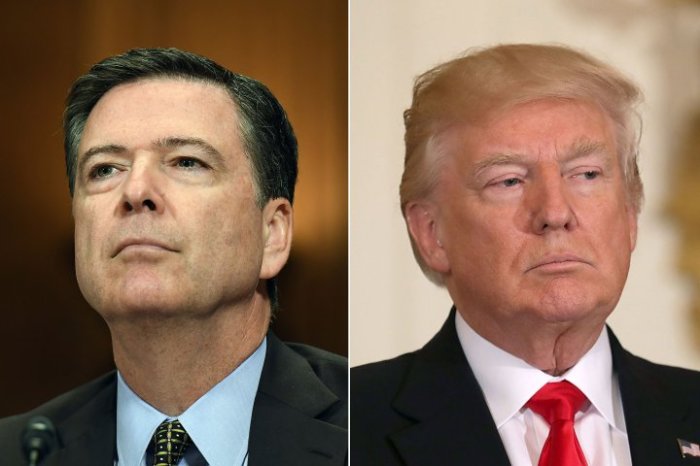
That brings us to Donald Trump and James Comey, and the loyalty demanded by one and withheld by the other. In his testimony before the Senate Intelligence Committee, Comey describes a tense meeting with Trump in the White House in January soon after the inauguration. Summoned to a private dinner with the president, Comey was told “I need loyalty, I expect loyalty.” According to The Washington Post, “Comey said he “didn’t move, speak, or change my facial expression in any way during the awkward silence that followed. We simply looked at each other in silence. The conversation then moved on, but he returned to the subject near the end of our dinner.” The president again asked for loyalty, but this time Comey recovered enough to promise him honesty. That apparently wasn’t enough for Trump: “I will give you honest loyalty,” said Comey, and with that rather stilted expression the dinner concluded. The conversation for Comey, again in the words of The Post, “raised concerns in his mind. ‘My common sense told me what’s going on here is he’s looking to get something in exchange for granting my request to stay in the job,’ Comey testified.”

In the light of what Royce has said about loyalty, some observations can be made. First, both men understand the word “loyalty” in very different ways. Trump uses it, rather paradoxically, to express both domination and need. He expects Comey’s loyalty as due him by virtue of his position as president. More importantly, he expects it as payment for the debt incurred by Comey because Trump allowed him to stay in the job—despite the fact that FBI directors typically serve a 10-year term. But Trump also needs Comey’s loyalty, a slip of the tongue that reveals perhaps more than he intended. He needs the assurance that everyone who serves him can be trusted and is willing to pay obeisance. Thus, for Trump loyalty is strictly a personal matter of the noble pledging fealty to the king.

Comey, however, recoils from such a misuse of loyalty because for him there is a much larger issue at stake. He has taken an oath to uphold the Constitution and to maintain a bright, clear line between the kinds and uses of power for their appropriate ends. Furthermore, the loyalty demanded is only as strong as the loyalty given; loyalty cannot be coerced, only earned.

Let us admit that even with the best of intentions our loyalties are divided and our motives are mixed. H. Richard Niebuhr, an American theologian and social critic, channels Royce quite neatly when he notes, “Without loyalty and trust in causes and communities, existential selves do not live or exercise freedom or think. Righteous and unrighteous, we live by faith. But our faiths are broken and bizarre; our causes are many and in conflict with each other. In the name of loyalty to one cause we betray another; and in our distrust of all, we seek our little unsatisfactory satisfactions and become faithless to our companions.”

If we accept Royce’s thesis that loyalty is dedication of oneself to a cause outside of oneself, then the differences between the two men become even starker. Trump’s version of loyalty is a demand centered on satisfying himself alone; Comey’s is a principle that points beyond itself — and him — to an ideal of justice and fairness. Comey is loyal to the ideal of loyalty; Trump is loyal only to himself.